Funded by
|
Through the Agreement on the European Economic Area (EEA), Iceland, Liechtenstein and Norway are partners in the internal market with the Member States of the European Union.As a way of promoting a continuous and balanced strengthening of economic and trade relations, the parties to the EEA Agreement have established a multi-annual Financial Mechanism, known as the EEA Grants. The EEA Grants aim to reduce social and economic disparities in Europe and strengthen bilateral relations between these three countries and the beneficiary countries. For the period 2014-2021, a total contribution of 2.8 billion euros has been agreed for 15 beneficiary countries. Portugal will receive 102.7 million euros. »Find out more at eeagrants.gov.pt
|
Program Operator

The funding is under the Blue Growth Programm, funded by Iceland, Liechtenstein and Norway, through the EEA Grants.
Composite solutions, Lda
 |
Its employees are united by an unwavering love for the sea, for the technologies that empower navigation, and for the craftsmanship that defines the boating world |
Corvus Norway AS
 |
Corvus Energy leads the charge in zero-emission maritime solutions, providing safe, innovative and reliable technology for all segments of the maritime industry |
INESC TEC (Instituto de Engenharia de Sistemas e Computadores, Tecnologia e Ciência)
|
INES TEC is a private, non-profit research institute driving scientific progress and innovation. They specialize in technology transfer, consulting, training, and fostering new tech startups
|
Mobyfly Portugal, Unipessoal, Lda
|
Mobyfly is pioneering sustainable high-speed marine transportation through hydrofoil technology, ensuring efficiency, passenger comfort and environmental responsibilities |
Financiado por
|
Através do Acordo sobre o Espaço Económico Europeu (EEE), a Islândia, o Liechtenstein e a Noruega são parceiros no mercado interno com os Estados-Membros da União Europeia.Como forma de promover um reforço contínuo e equilibrado das relações económicas e comerciais, as partes do Acordo EEE estabeleceram um Mecanismo Financeiro plurianual, conhecido como EEA Grants. Os EEA Grants visam reduzir as disparidades sociais e económicas na Europa e reforçar as relações bilaterais entre estes três países e os países beneficiários. Para o período 2014-2021, foi acordada uma contribuição total de 2,8 mil milhões de euros para 15 países beneficiários. Portugal receberá 102,7 milhões de euros. “Saiba mais em eeagrants.gov.pt
|
Operador do programa
O financiamento é efectuado ao abrigo do Programa Crescimento Azul, financiado pela Islândia, Liechtenstein e Noruega, através dos EEA Grants.
Composite solutions, Lda
|
Os seus colaboradores estão unidos por um amor inabalável pelo mar, pelas tecnologias que potenciam a navegação e pelo trabalho artesanal que define o mundo da náutica |
Corvus Norway AS
|
A Corvus Energy é líder em soluções marítimas de emissões zero, fornecendo tecnologia segura, inovadora e fiável para todos os segmentos da indústria marítima |
INESC TEC (Instituto de Engenharia de Sistemas e Computadores, Tecnologia e Ciência)
|
O INES TEC é um instituto de investigação privado, sem fins lucrativos, que promove o progresso científico e a inovação. Especializam-se na transferência de tecnologia, consultoria, formação e promoção de novas empresas tecnológicas |
Mobyfly Portugal, Unipessoal, Lda
|
A Mobyfly é pioneira no transporte marítimo sustentável de alta velocidade através da tecnologia hydrofoil, garantindo eficiência, conforto dos passageiros e responsabilidade ambiental |



THE PRODUCT DESIGNER
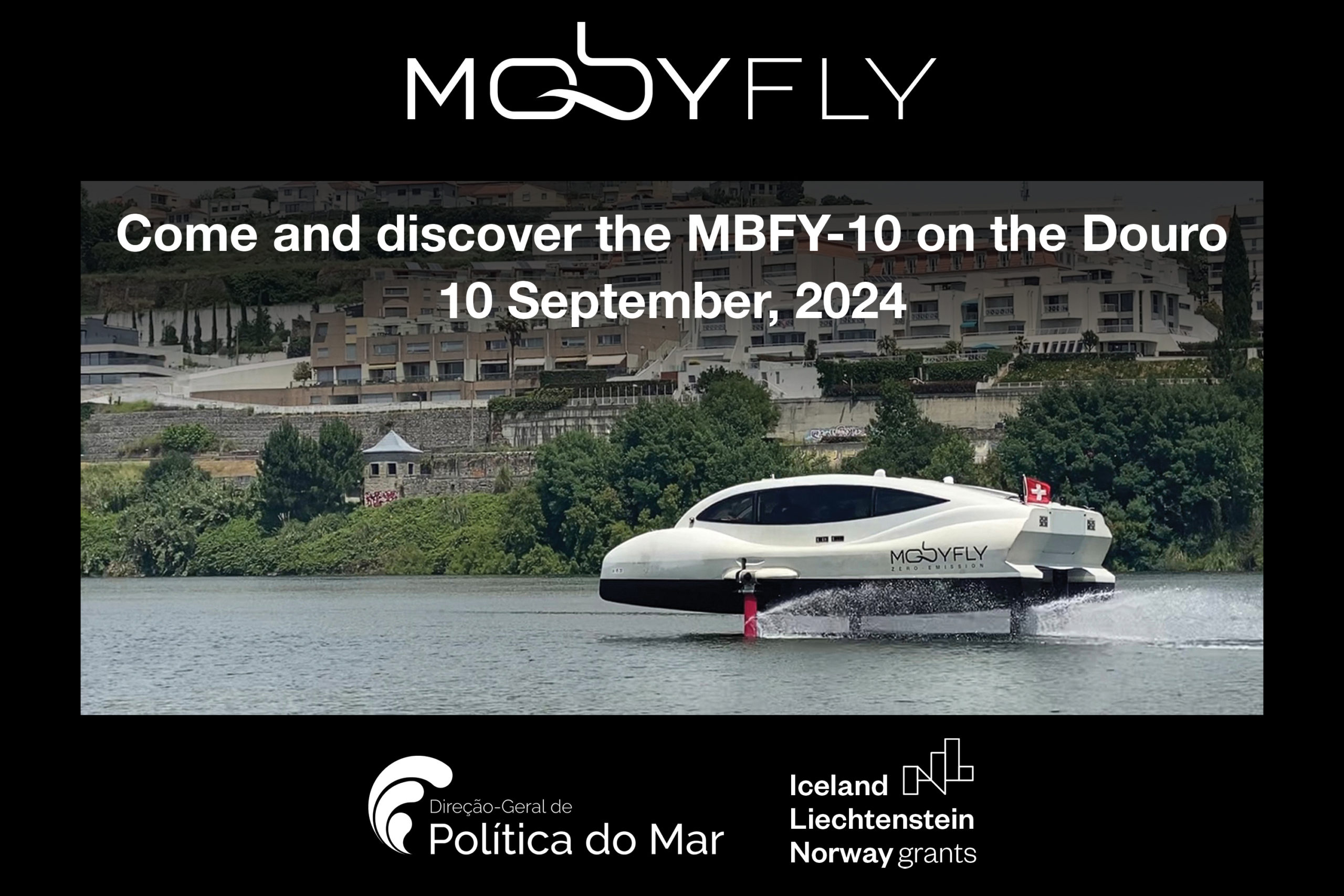
MobyFly designs and delivers zero-emission hydrofoil boats that promise to change waterborne travel forever
OBJECTIVES OF THE FLYPASS PROJECT
Overall, this project concept has the potential to revolutionize passenger transportation by offering a faster, more efficient, environmentally friendly, and comfortable travel experience.
The aim of the Flypass project is the development of an efficient hydrofoil boat capable of comfortably transporting 12 passengers above the waves, at speeds of over 70 km/h. These boats will be extremely efficient, requiring up to 70% less energy than current diesel ferries, and offering a more sustainable and renewable solution for public transportation
High-performance
- The vessel’s structure is designed and produced using high-performance composite materials and production methods, allowing the production of a safe and strong structure with minimum weight, which is essential to maximize the boat’s efficiency
Foiling system
- The foiling system allows the boat to take-off and lift the hulls out of the water, reducing the hydrodynamic drag; in this way, the ship achieves the same speeds while spending less energy; this guarantees that the vessel, equipped with an electric powertrain, can compete and even overcome the ranges and speeds achieved by current diesel ferries; besides that, as the boat creates almost no waves, it has minimum impact on the surrounding nature
Electric powertrain
- Rapid battery charging and development of exclusive battery modules, to fulfill all the energy and operational requirements of the boat, in terms of speed, range and charging time
Docking
- Automatic docking and loading system: to assist the captain in docking operations, the boat will be equipped with a dedicated autodocking system
HISTORY
The launch of Flypass Project
Overall, this project concept has the potential to revolutionize passenger transportation by offering a faster, more efficient, environmentally-safe and comfortable travel experience.
The Flypass project was proposed in 2021 predicting a starting date of 2022 and duration of 2 years for its execution.
The website Flypass
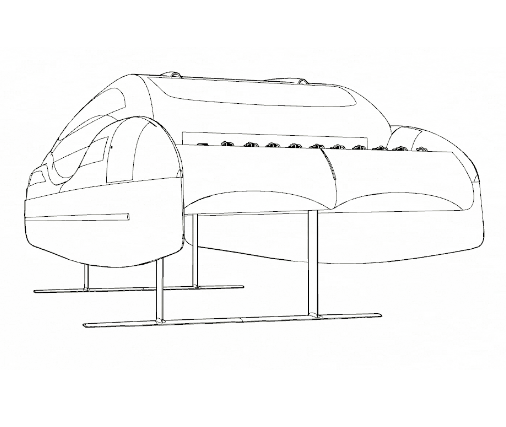
Boat general design
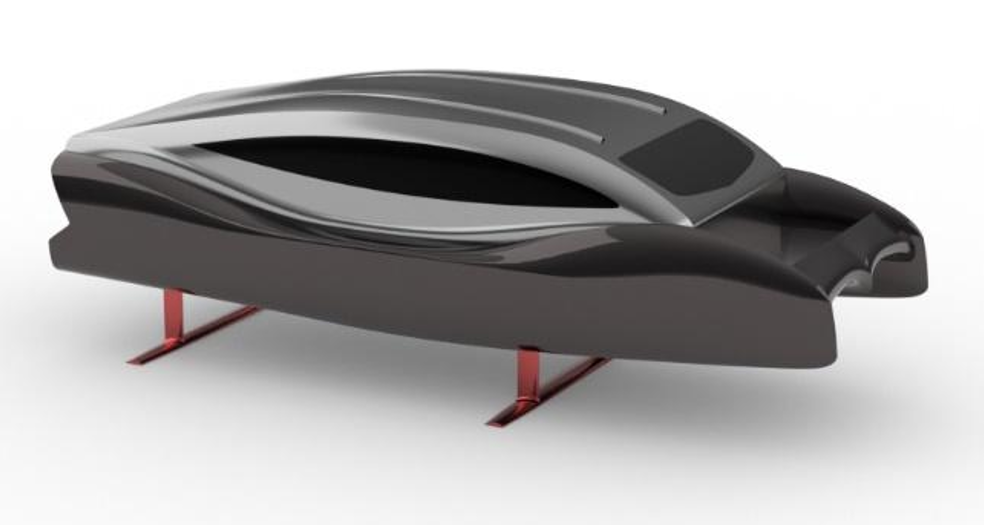
Preliminary design
With the knowledge taken from the system’s integration on the prototype boat and all the yard and on-water testing activities, it was possible to improve the design of the vessel, featuring second generation design upgrades
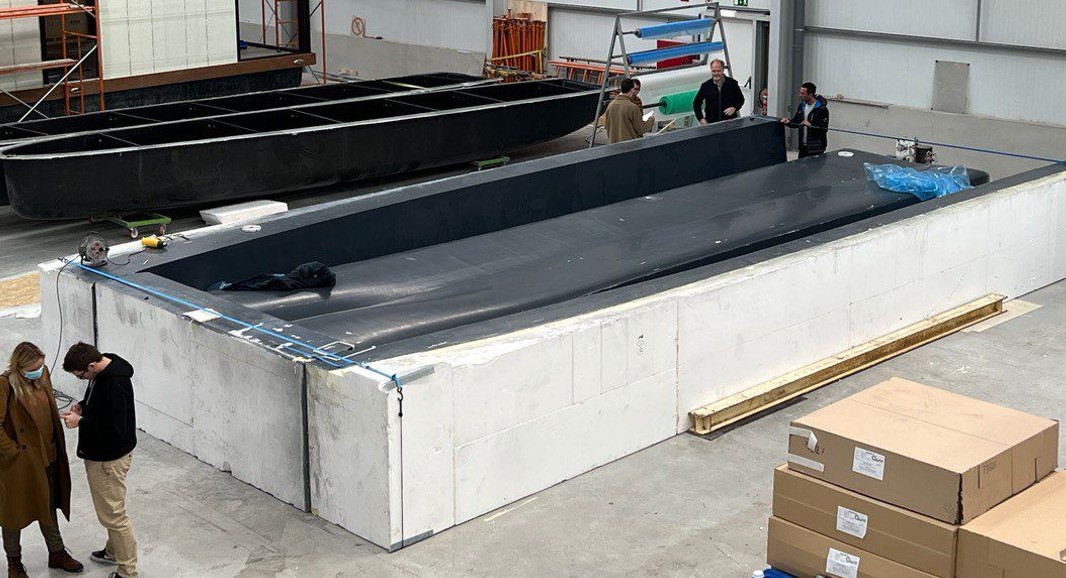
Manufacturing the hull
The MBFY10 boat, like the preliminary boat, is to be built using composite materials
General Overview
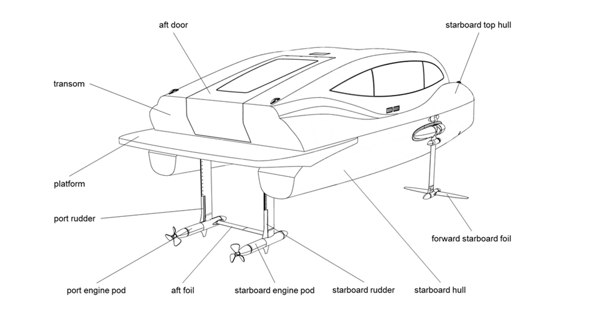
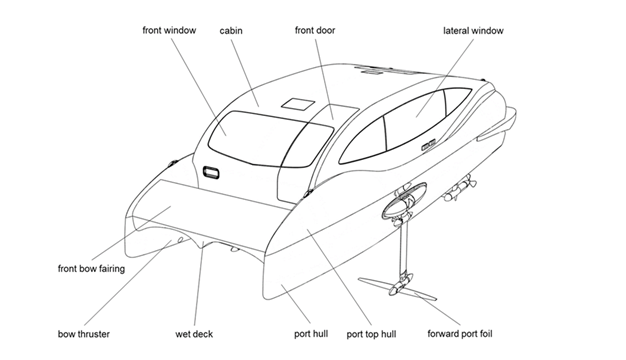
This illustrates the major parts of the boat shell structure, like the hulls, wet deck, cabin, transom, and front bow fairing. Besides that, the major systems of the boat, like the forward foils, aft foils, and propulsion systems, are identified as well
Using foils
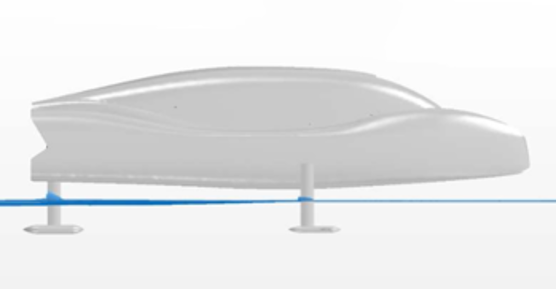
At higher speeds, hydrofoils lift the boat’s hull out of the water, reducing drag significantly. This allows for faster and more efficient travel compared to traditional boats.
Hydrodynamics
When comparing Archimedean (non-foiling) high-speed crafts with other non-maritime means of transportation, the main difference is that this kind of vessels require much more power to achieve the same speed, because of the drag contribution coming from the wave-generation phenomena
Auto docking
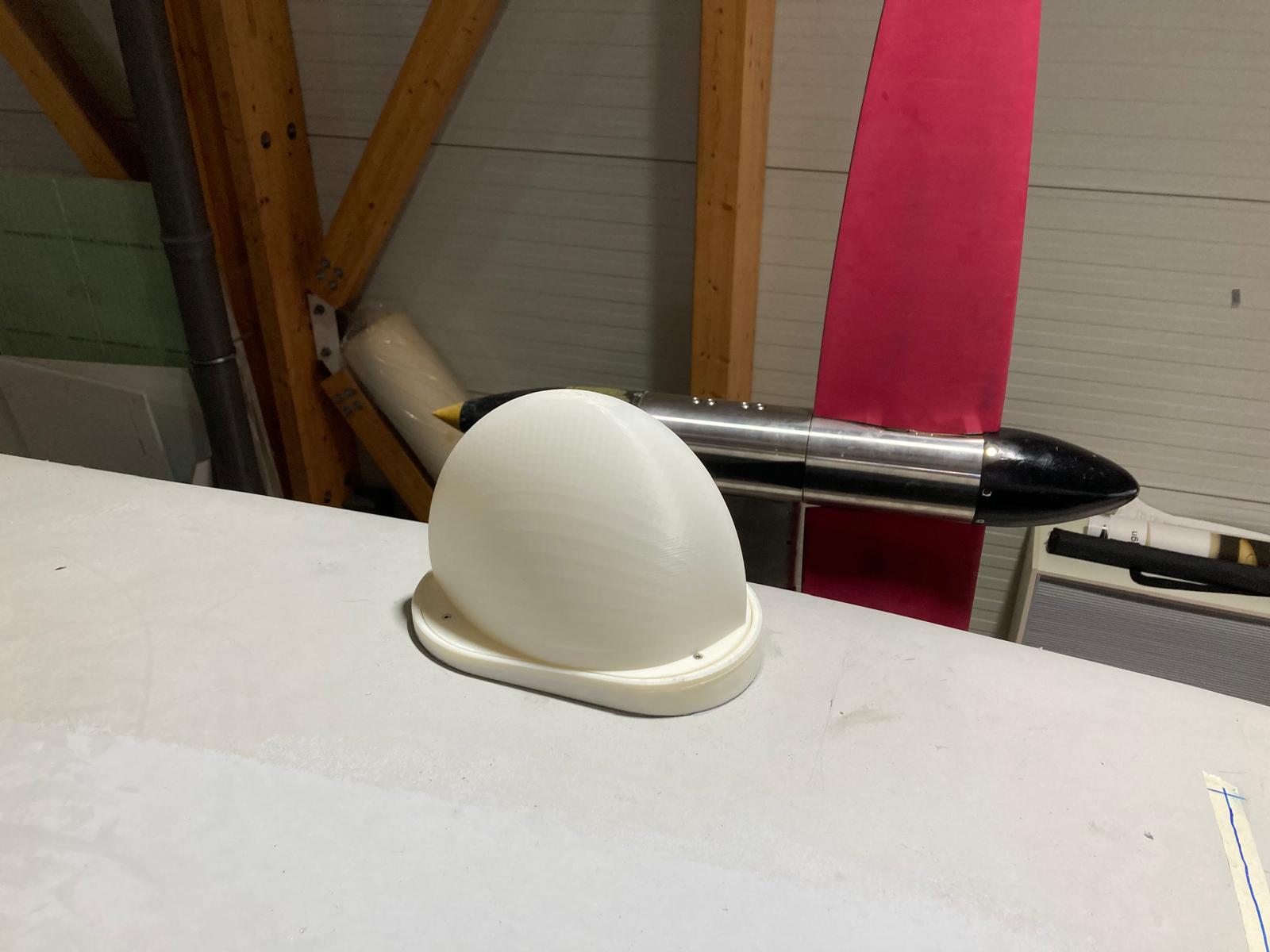
The chosen navigation aid solution also includes docking assistance.
The captain decides when to hand over to the automatic management system.
Electronics and mechanism
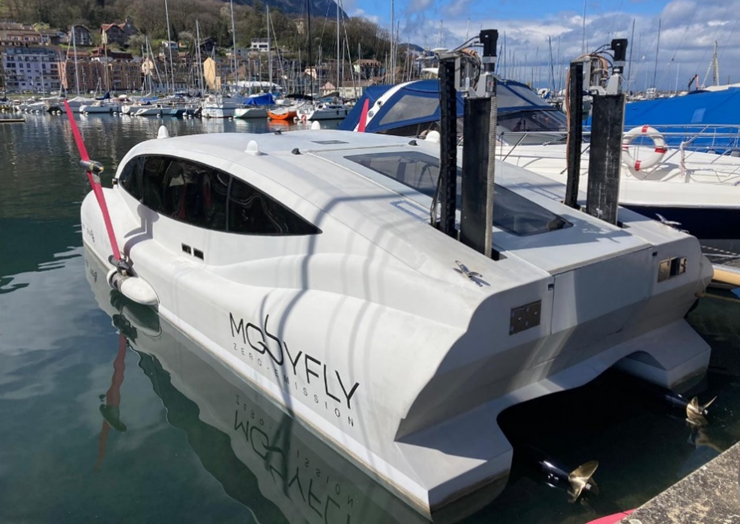
The Aft foils are visible in a retracted position, the front foils in a raised position
Confort
Hydrofoils can dampen wave impacts, resulting in a smoother and more comfortable ride for passengers.
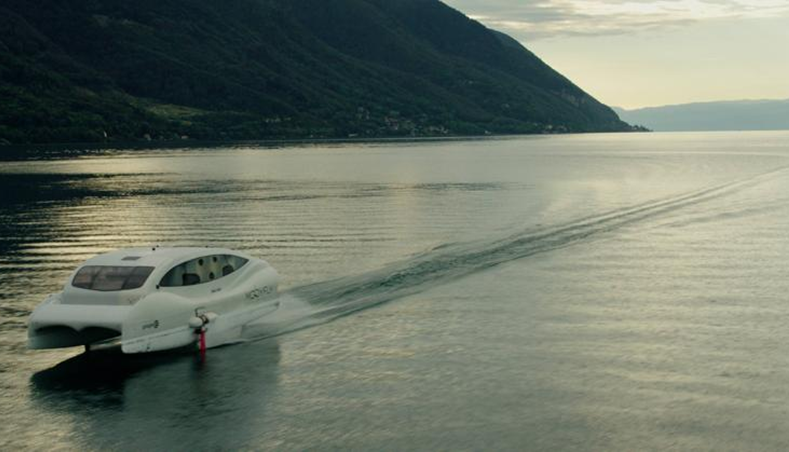
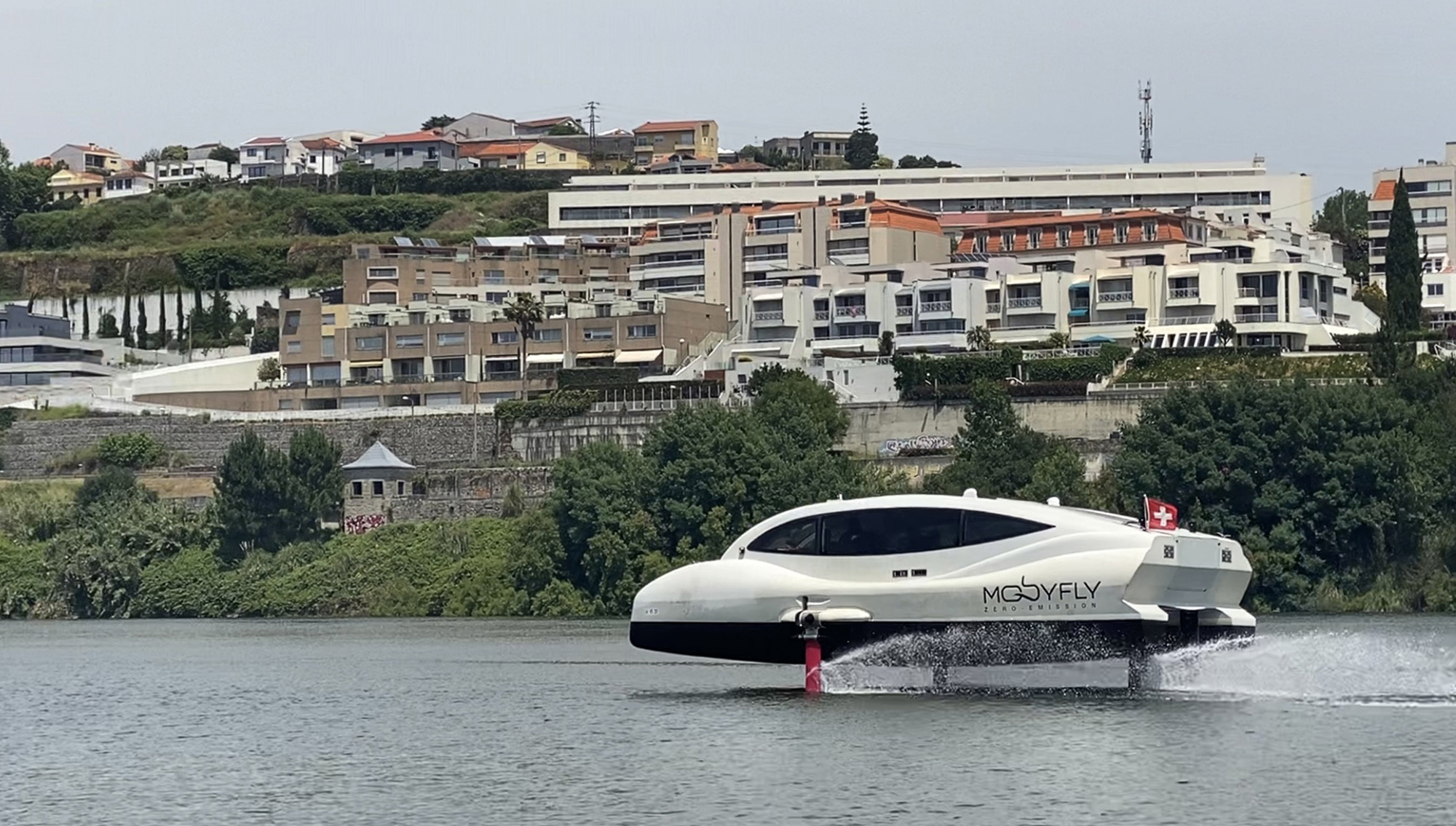
First tests
The first sailings took place on Lake Geneva for the clear water and in Porto in Portugal for the salt water tests
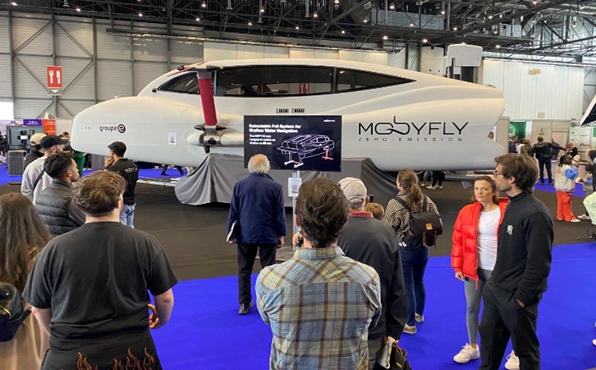
Showcased
The boat was presented at the Geneva Invention Fair, where it was a big attraction.
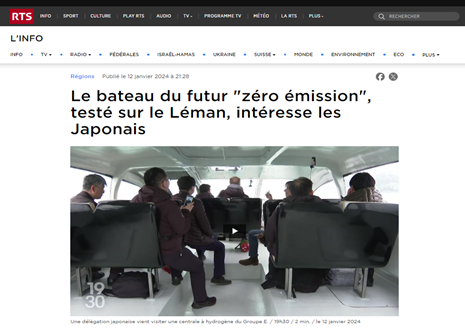
Showcased
A Japanese delegation from the port of Tokyo is interested in Mobyfly.
World Expo 2025 in Osaka is a big target.
DESIGN BY MOBYFLY.COM